

From Science Matters
By Ron Clutz

Mark P. Mills and Neil Atkinson blow the whistle on projections written in International Energy Agency’s (IEA) latest report, the World Energy Outlook. Below is the announcement of the report findings, key exhibits and Executive summary, excerpts in italics with my bolds and added images. Link to full study at the end.
Overview
Industry players consider the International Energy Agency’s signature annual report, the World Energy Outlook, to contain highly credible analyses. However, a new critique from the National Center of Energy Analytics experts finds the IEA’s latest scenarios on future oil demand to be problematic and potentially, dangerously wrong.
“When it comes to policy or investment planning, there is a distinction with a critical difference when it comes to what constitutes a “forecast” (what is likely to happen) versus a “scenario” (a possibility based on assumptions). The challenge is not in determining whether the scenarios are completely factual per se, but instead whether they are factually complete,” wrote the authors in their report.
The most widely reported WEO scenario is that the world will see peak oil demand by the early 2030s. NCEA co-authors Mark P. Mills and Neil Atkinson believe that this conclusion is a prima facie case; minimally, the IEA should include business as usual (BAU) scenarios, not those based on all “high cases” or unrealistic possibilities.

Mills and Atkinson pinpoint 23 flawed assumptions used in the WEO scenarios to predict future oil demand, including:
- IEA assumes: Corporate transition policies are real and durable. NCEA counterclaim: Myriad corporations, having earlier proclaimed fealty to “energy-transition” goals, are either failing to meet such pledges or overtly rescinding them.

- IEA assumes: Transition financing will continue to expand. NCEA counterclaim: Alternative energy projects have become more expensive and difficult to finance, and wealthy nations are increasingly reluctant to gift huge amounts of money to the faster-growing but poorer nations, many of which have governance issues.

- IEA assumes: China’s actions will follow its pledges. NCEA counterclaim: The scale of China’s role in present and future energy and oil markets requires scenarios that model what China is doing—and will likely do—rather than what China claims or promises.
National Energy Transition Plans

- IEA’s assumes: The oil growth in emerging markets will be low. NCEA counterclaim: The fact of low demand in some poorer regions—e.g., Africa uses roughly one-tenth the per-capita level in OECD countries—points to the potential for very high, not low, growth in those markets.

- IEA’s assumption: Governments will stay the course on EV mandates. NCEA’s counterclaim: Recent trends in many countries and U.S. states show policymakers weakening or reducing mandates and subsidies.
Flawed Assumptions Lead to Flawed Conclusions
Listed below is a summary of the flaws in 23 (but far from all) of the assumptions used in the WEO scenarios that are relevant to guessing future oil demand. Meaningful scenarios for planning for future uncertainties should include a range of realistic inputs, not just those that are aspirational.
Assumptions about baseline factors that affect oil forecasts
- Assumption: STEPS is a useful baseline.
Flaw: The baseline scenario, rather than “business as usual,” assumes a future based on countries’ Stated Policies Scenario (STEPS), which not one country is implementing in full. - Corporate transition policies are real and durable.
Flaw: Myriad corporations, having earlier proclaimed fealty to “energy-transition” goals, are either failing to meet such pledges or overtly rescinding them. - Higher economic growth is unlikely.
Flaw: Ignoring the possibility of higher economic growth, based on historical trends and the goals of all nations, leads to scenarios that underestimate future oil demand. - Transition financing will continue to expand.
Flaw: Alternative energy projects have become more expensive and difficult to finance, and wealthy nations are increasingly reluctant to gift huge amounts of money to the faster-growing but poorer nations, many of which have governance issues. - Efficiency gains and structural changes will lower global demand for energy.
Flaw: Long-run trends show that energy-efficiency gains make energy-centric products and services more affordable and thus do not reduce, but instead generally stimulate, rising demand. - Solar and wind power are 100% efficient.
Flaw: The WEO 2024 assertion that “most renewables are considered 100% efficient” contradicts fundamental physics and is, arguably, a silly PR-centric rhetorical flourish. - China’s actions will follow its pledges.
Flaw: The scale of China’s role in present and future energy and oil markets requires scenarios that model what China is doing—and will likely do, in fact—rather than what China claims or promises.

Assumptions regarding oil’s future
- The oil growth in emerging markets will be low.
Flaw: The fact of low demand in some poorer regions—e.g., Africa uses roughly one-tenth the per-capita level in OECD countries—points to the potential for very high, not low, growth in those markets. - The EV market share will accelerate.
Flaw: Slowing market adoption and retrenchments in automakers’ EV plans or promises are evident, calling for scenarios that model realities that could persist. - Governments will stay the course on EV mandates.
Flaw: Recent trends in many countries and U.S. states show policymakers weakening or reducing mandates and subsidies. - China’s EV “success story” leads quickly to lower oil demand.
Flaw: Data point to the fact that in the real world, EV sales and gasoline consumption are both rising.
Assumptions about other transportation markets
- There will be significant electrification of heavy-duty trucks.
Flaw: There is no evidence of market adoption for any fuel option that leads to far higher capital costs and enormous degradation in performance. - There will be significant electrification and fuel alternatives in aviation.
Flaw: There are no trends showing non-oil options for even a tiny share of the aviation market, in an industry that forecasts booming demand. - There will be significant electrification and fuel alternatives for ships.
Flaw: The only modestly significant change in oil used for global shipping comes from the use of liquefied natural gas, another (and generally more expensive) hydrocarbon. - There will be a rapid decline in oil used for Middle East power generation.
Flaw: Despite pledges and pronouncements, the year 2024 saw continued, and even higher, use of oil for electricity generation. - The growth in petrochemicals and plastics will be slow.
Flaw: Slower growth is anchored in recycling enthusiasms that markets are not adopting and expectations of new recycling technologies that remain expensive or unproved. - All scenarios lead to peak oil demand by ~2030.
Flaw: A WEO core conclusion that “combing all the high cases” leads to “global peaks for oil” by ~2030 is, prima facie, not based on all “high cases” but on unrealistic scenarios.
Assumptions regarding associated industries
- The supply of critical minerals will meet transition goals.
Flaw: Myriad studies have now documented the fact of a looming shortfall in current and expected production and of the challenges in changing that status quo. - Prices of critical minerals will be low.
Flaw: It is fanciful in the annals of economic history to imagine that record-high demands won’t lead to far higher prices for the critical minerals needed to build EVs (as well as for wind and solar hardware). - China won’t exercise minerals dominance as an economic or a geopolitical tool.
Flaw: China has already signaled over the past year that it is willing and able to implement export controls, or pricing power on critical minerals, where it holds significant global share. - Oil and gas annual investments are adequate to avoid economic disruptions.
Flaw: Current levels of investment are not adequate to meet demands under business-as-usual scenarios, especially when combined with likely decline rates of extant oil fields. - The future decline rate from existing oil fields will continue historical trends.
Flaw: The much faster decline rate in output from now-significant U.S. shale fields has altered the global average decline rate, pointing to the need for increasing investments to avoid a shortfall. - OPEC will be a reliable cushion to manage oil-supply disruptions.
Flaw: History suggests that scenarios should include alternative possibilities to relying on OPEC to provide a cushion for meeting unexpected shortfalls in production or increases in demand.

Executive Summary: Flawed Assumptions Lead to Dangerous “Forecasts”
For decades, the International Energy Agency (IEA) was the world’s gold standard for energy information and credible analyses. Following the commitment of its member governments to the 2015 Paris Agreement climate accords, the agency radically changed its mission to become a promoter of an energy transition. In 2022, the IEA’s governing board reinforced its mission to “guide countries as they build net-zero emission energy systems to comply with internationally agreed climate goals.”

The IEA’s current preoccupation with promoting an energy transition has resulted in its signature annual report, the World Energy Outlook (WEO), offering policymakers a view of future possibilities that are, at best, distorted and, at worst, dangerously wrong.
The 2024 WEO’s central conclusion, its core “outlook,” has been widely reported as a credible forecast, i.e., something likely to happen: “[T]he continued progress of transitions means that, by the end of the decade, the global economy can continue to grow without using additional amounts of oil, natural gas or coal.”

The WEO itself states that it doesn’t forecast but has scenarios—explorations or models of possibilities, and cautions: “Our scenario analysis is designed to inform decision makers as they consider options…. [N]one of the scenarios should be viewed as a forecast.” Scenarios that usefully “inform” need to be based on realistic possibilities and assumptions. But there is one foundational assumption—one that the IEA has for decades included in its scenarios and that has been banished from the WEO: the possibility of business as usual (BAU).
Instead, the WEO’s baseline scenario now assumes that nations are undertaking their specific energy-transition plans that they promised in order to comply with the 2015 Paris Agreement, i.e., “stated policies scenario” (STEPS). Yet none of the signatories to that Agreement is fully meeting its promises, and most are a long way behind schedule. Believing something that is not true is not just problematic; it meets the definition of a delusion.
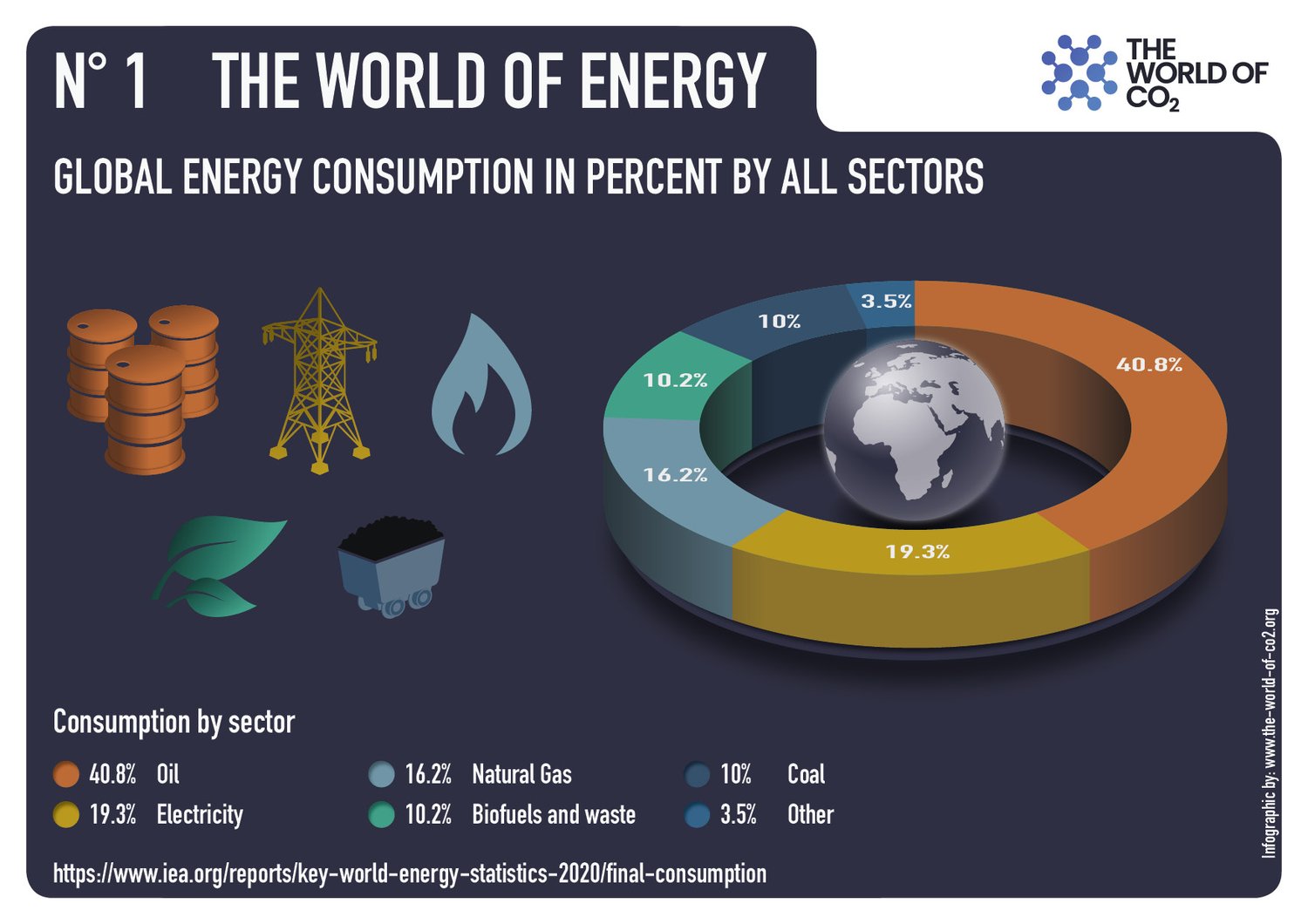
It is fanciful to forecast that, over the next half-dozen years, the growth in the world’s population and economy won’t continue a two-century-long trend and lead to increased use of the fossil fuels that today supply over 80% of all energy, only slightly below the share seen 50 years ago. The data show that the global energy system is operating essentially along BAU lines and not only far off the STEPS, but even further away from the more aggressive transition aspirations that the WEO also models.

In this analysis, we focus on highlighting 23 problematic, flawed assumptions that are relevant specifically to the WEO’s oil scenarios and the widely reported “forecast” that the world will see peak oil demand by the early 2030s (see box on pp. 4-5, Flawed Assumptions Lead to Flawed Conclusions). While other scenarios about other energy sources are critical as well, oil remains a geopolitical touchstone and the single biggest source of global energy—10-fold greater than wind and solar combined. At the very least, this analysis points to the need for real-world scenarios in general and, in the case of oil, the much higher probability that demand continues to grow in the foreseeable future and, possibly, quite significantly (below, see Global Oil Demand: Future Scenarios).

Debating the intricacies in flawed assumptions about energy scenarios is no mere theoretical exercise. The IEA’s legacy reputation continues to influence not only trillions of dollars in investment decisions but also government policies with far-reaching geopolitical consequences.
Energy Delusions: Peak Oil Forecasts

Share this:

Discover more from Climate- Science.press
Subscribe to get the latest posts sent to your email.
You must be logged in to post a comment.